See below for our report on product delays within the NHS Supply Chain.

Context of NHS Supply Chain
At a time when the National Health Service is facing increasing strain on its resources, including staff shortages, an ageing population and delays in infrastructure projects, everyone is in agreement that the organisation needs more support. It was born out of the mantra of “free at the point of use”, but with government debt at an all time high during peace time, and the nursing unions striking for higher pay, the impression is that something has got to give. Surveys continually put NHS as the number one concern in the eyes of the electorate, and the institution is perceived to be held in high regard both amongst the general public and internationally. This perceptions of its quality of service are a direct reflection of the efficiency of any government. With a fear of another outbreak of a COVID type virus over the winter months, there is pressure on the service to become more resilient against these types of shocks in the future.
Within this complex mesh of problems, the question of supply chain comes into focus. With the increased bureaucracy caused by Brexit, the after shocks of the pandemic and the Ukraine war, how has the NHS coped with these changes and adapted to increasing delays in getting equipment and supplies into the hands of staff, and ultimately patients. There is the issue of supplies of PPE equipment and the ongoing investigations into the transparency of the procurement procedure. ICU products were also affected as well as ventilator masks, fluid-repellent gowns, overalls, medical kits, breathing filters, external breathing pumps and other consumables.
NHS supply chain report reveals 61% of medical equipment delays throughout NHS are caused by global component shortages. They are responsible for this process and according to their website they “manages the sourcing, delivery and supply of healthcare products, services and food for NHS trusts and healthcare organisations across England and Wales”. It handles 7.7 million orders a year across 16,000 locations and consolidates orders from 930 suppliers. It has a mandate for increasing efficiencies, cutting costs and reducing duplication. It aims to leverage the buying power of the organisation to achieve best value for money. The orgnisation is broken into areas of expertise known as” Category Towers”, that provide that specialism into the NHS supply chain. These specialisms include capital medical equipment, clinical consumable, PPE, food and office products. They also have their own logistics arm and technology division. Category Towers can have different orginational structures including collaborative ventures, NHS trusts or suppliers. They partner with clinical colleagues ensuring that all purchases are fit for purpose.
To put this into a historical context, this came from the “future operating model” which took over from the previous Private Public Partnership provided by DHL and the Department of Health. The idea was to bring back some elements of the program under direct government control but with provision for advice from external bodies. Initially large Trusts thought they could do better and, purchase directly from the supplier therefore bypass the NHS Supply Chain model. This was not always the case and certain inefficiencies continued. To encourage take up NHS Supply Chain ensured the price you pay is what is what you get. They used their collective buying power to guarantee the lowest price so there was no benefit in going direct. As there was no mark up the administration costs were absorbed into the NHS trusts budgets.
In order to provide consistent quality assurance there is an internal team called “Clinical and Product Assurance” (CAPA) which co-ordinates with medical professionals to make sure that the supplies are fit for purpose.
Their guiding principles are:
- Safety,
- Quality
- Assurance.
The following are practices they have put in place and goals they wish to achieve:
- They have put in place monitoring systems which aim anticipate delays and increase stock levels accordingly.
- They wish to integrate with regional partners via the National Pricing Matrix through sustainable measures within the long-term plan brought forward in January 2019.
- NHS supply chain is managed by the Supply Chain Coordination Limited (SCCL), which oversee continuous improvement including the cost efficiency across the service.
- There is a national consumables reserve with over stocked products held above the minimum order quantity which are to be sold at discounted rate.
- Demand management is also in place with scarce items allocated a “maximum daily quantity threshold” and orders amended, and customers notified. This is ensure continued availability.
- Critical stock is sometimes removed from normal ordering to protect supply then allocated according to need.
- There is an attempt at alternate product mappings (currently 8000) so that replacement products can fulfil operational needs and mitigate problems caused by stock shortages. These are broken down to a direct alternative and indirect alternatives for products that are less than a perfect match. The user can then decide whether that is acceptable.
- Move to on-line catalogues.
- Category towers liaising with suppliers for monitoring of global events.
- Further optimising of supply channels.
Methodology
As there are a variety of bodies involved in the health procurement process, data is held in disparate locations making it more difficult to collate and review. With no central system it makes it more difficult to interrogate and analyse trends, anticipate bottle necks and have a general overview of the efficiency of the logistics network. It is with this in mind that we have decided to take a select sample of data from some of the NHS’s major suppliers and stakeholders as registered on the NHS Supply Chain website. We measured incidents of delays, non-availability and disruption from medical equipment suppliers that organise logistics on behalf of the service. This was a manual process, so we engaged several data analysts to interrogate the Important Customer Notices (ICN) logs to look for trends, length of delays, and types of equipment affected. ICN’s are information from a supplier of an issue that may affect the provision of a product or range of products. These include expected delivery dates and possible causes. This investigation looked at ICN’s over the last 2 week of November of 2022, so it is a snap-shot of events, as these are update all the time.
ICN’S
ICN’s are important Customer Notices that are displayed on the NHS supply chain website for suppliers to place any known issues with regard to product availability. They provide a forward view of delays with potential resolution dates and causes. They may advise on alternate products or limit supply if stocks run low. Once an issue was resolved, it is then archived.
Assumptions
As we are dealing with disparate and incomplete information, we have made some assumption in an attempt to provide consistency.
- A number of ICN’s did not provide a resolution date so we have assumed the worst case and we have allocated them to the 31st of March 2023 to isolate these from the ones that have a date applied.
- Even if a date is provided around one third of these have necessitated another change of date due to further delays. This indicates the volatile nature of the industry and how much supply chains have been affected by recent disruptions.
- As the data was sourced manually, we had to make subjective decisions in regard to the classification of reasons provided. As these judgement calls were made by individuals that may have placed their own interpretation on some of the results.
- As the time period of data points was limited to the last two weeks of November 2022 there may be some outliers in the set that are one offs that may skew the results for long term trends. A further exercise later in 2023 is planned with the same assumptions to compare the results for any variances.
- As the exercise was a combination of statistical and subjective information the results were reviewed by some NHS staff to see whether the information corelates with their anecdotal observations of what is happening on the ground.
- The delay times are based on the date that the notice had been placed on the NHS Supply Chain Website and the proposed resolution date. As we don’t have the information of when a purchase order was placed and when stock was received, we don’t have actual real time data to compare. All we are doing is comparing a notice of delay, to a planned resolution date.
Findings
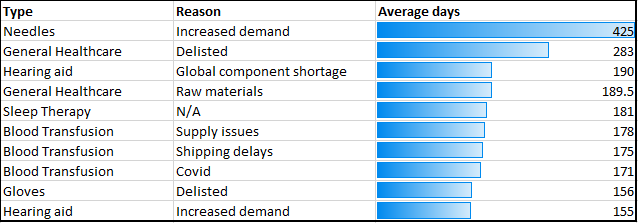
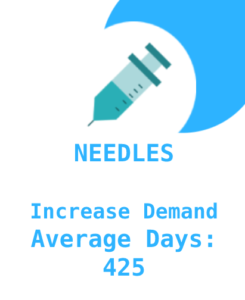
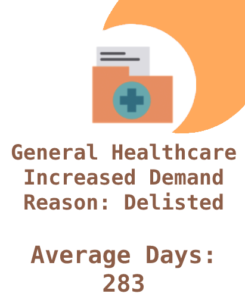
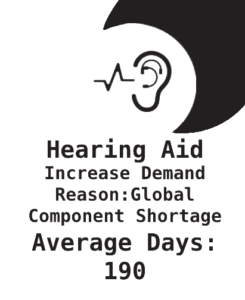
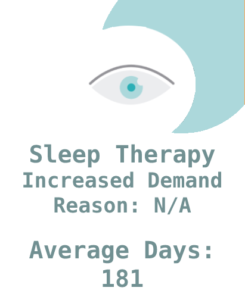
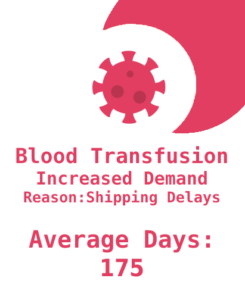
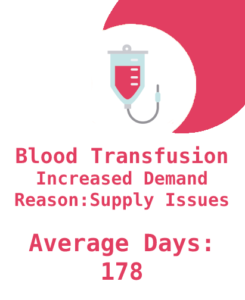
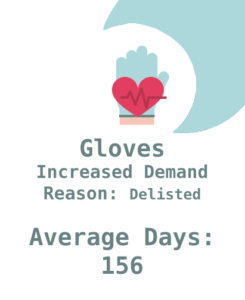
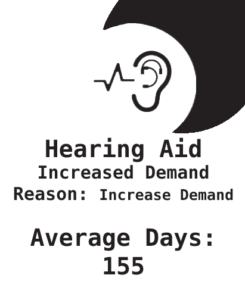
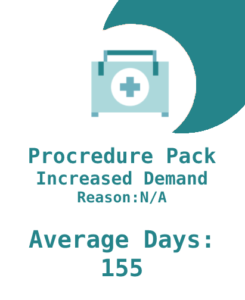
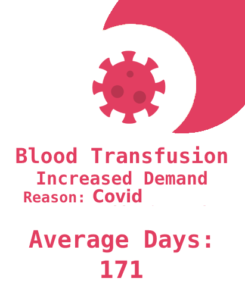
Top 10 Types of products delayed by reason in average days from ICN notice date:
Insights from findings:
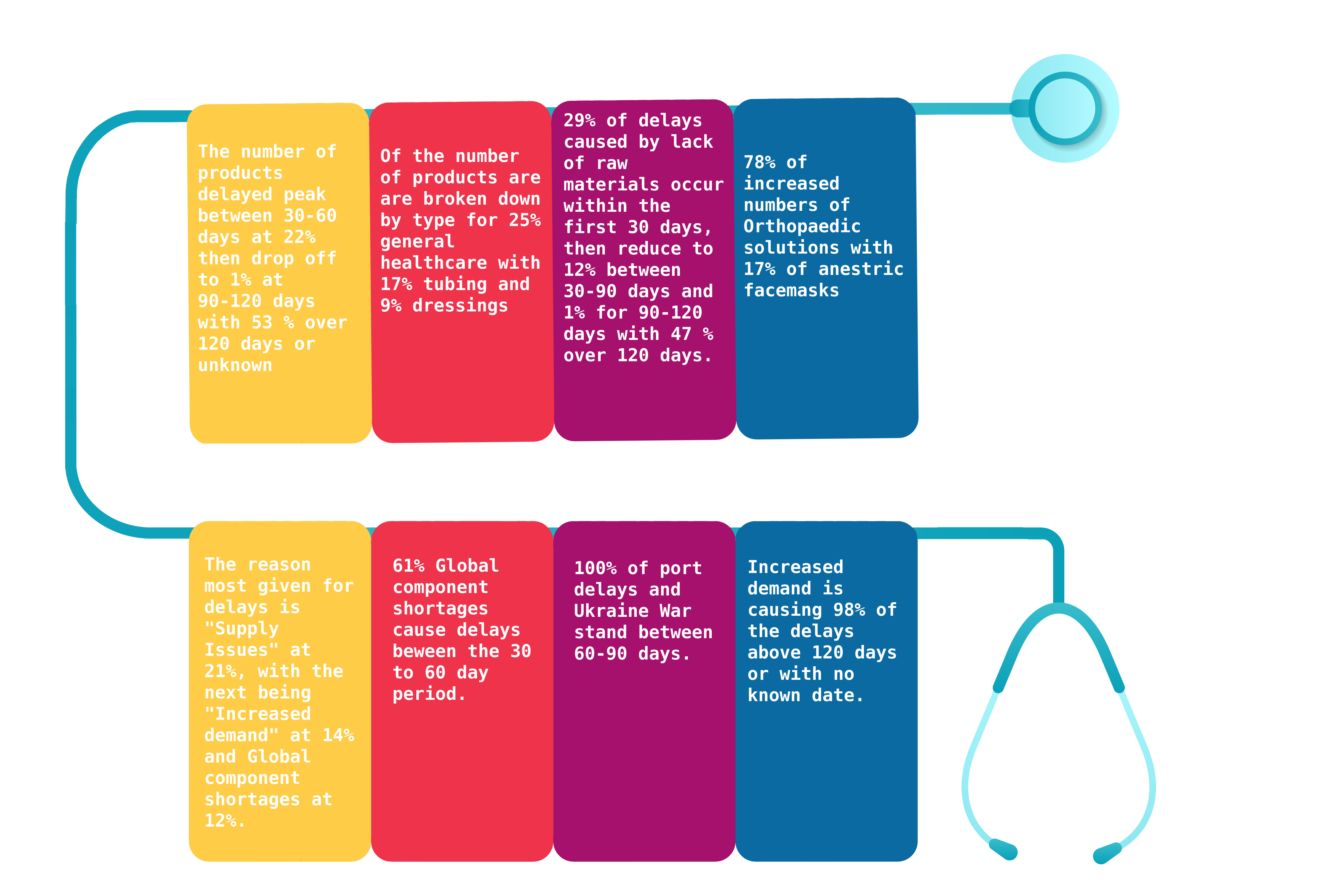
- The reason most given for delays is “Supply Issues” at 21%, with the next being “Increased demand” at 14% and Global component shortages at 12%.
- 61% Global component shortages cause delays between the 30-to-60-day period.
- Increased demand is causing 98% of the delays above 120 days or with no known date
- 100% of port delays and Ukraine War stand between 60-90 days.
- 29% of delays caused by lack of raw materials occur within the first 30 days, then reduce to 12% between 30-90 days and 1% for 90-120 days with 47 % over 120 days.
- The number of products delayed peak between 30-60 days at 22% then drop off to 1% at 90-120 days with 53 % over 120 days or unknown.
- Of the number of products are broken down by type for 25% general healthcare with 17% tubing and 9% dressings.
- 78% of increased numbers of Orthopaedic solutions with 17% of anaesthetic face masks.
- Delays of most items seem to happen in the 30-to-60-day mark with general supply and global components being the major causes.
- These decline substantially between 60-90 days and are insignificant after then. The number of unknowns also show how hard it is control due to the number of unforeseen variables.
Summary Conclusion
The effect of Covid seems to have receded with less than 1% of respondents stating that was a reason for delays. This could have been a contributing factor that led to further complications of global component shortages which was at 12%. Port delays and the War in Ukraine appear to be conjoined elements that affected a particular period of 60 to 90 days. Within this category every date was identified so this seems to have been a known event that was planned for. In spite of all the variables, one trend is the consistent increase in demand at 14%. This implies that in spite of recent disruption (Pandemic, War in Ukraine), this would have happened anyway. Even though the health industry has adapted to the shock of recent events, the long-term trend still increased the demand on health services worldwide. This is caused by underlying trends such as increased net population, ageing demographics, developments in technology and expectations amongst the general public that health services should be accessible and affordable to all. The quantity of products being ordered from our survey, such as tubing, blood transfusions and balloon catheters tend to be consumed by an elderly population. Whether services are totally public driven which is the European model or in private hands such as the US, the increased strain on equipment, resources and people is now telling on all territories. The recent events have shown how the industry can cope with fast moving events that have a global impact, but the underlying issues that have been building for decades remain. The indications are that something is going to break within the system and either people’s expectations are going to have to change, or additional resources are going to need to be allocated to cope with ever ballooning costs as we enter a new age of limits on government expenditure. The balancing act between delivery of services and resources deployed will become increasingly difficult to maintain. The fear is what will the service look like in the future if the standard of care is reduced as governments can’t raise sufficient funds to cope with demand. This will have repercussions well beyond the health sector but has the potential to make seismic changes in the electorate as certain sacred cows come crashing down. In the past there may have been an attitude of doctor knows best and you get what you are given. Now there is a change in attitude as the public see themselves as a consumer therefore there is an expectation of a level of service and an instant fulfilment of need. Health institutions encouraging users to be more involved in decision making process.
Footnote:
Part of my interest in this research comes from coming from a family that worked in the health sector. My Dad was hospital manager in a small country town in my native Australia and my uncle was third top in the health commission. I had this as a background of my formative years, and I remember that when my dad retired in the early eighties, he said that it was the right time to get out, as the bureaucracy was moving in on his independence. Budgets were cut yet with increased demands for performance. Since I have experienced first class care from front line staff in the NHS, and heard their frustrations in trying to work around an inefficient system, this sparked my interest to revisit the subject. The NHS attempts to provide a worlds class service within an underfunded system.
Yet I’m still shocked when visiting Australia and seeing relatives in hospital wards that were build in the prewar period. Ambulances backed up in car parks due to lack of available beds and the layers of administration that staff have to pierce through in order to get a decision. These pressures seem to be predominant no matter what political regime a health service operates within. If things where bad 40 years ago then have only compounded and there are no simple or easy answers to find a resolution. From the information we have gleaned from these reports, and talking to NHS staff, indicate a system that can adapt and find creative solutions to immediate issues, but the long-term diagnosis seems much harder to resolve.
About the Author
Malcolm Ford, has been Business System Analyst at IT Enterprise Business Solution for over 13 years. His main role is implementing ERP and inventory software in companies through out the UK. He has also developed business intelligence dashboard for summary data analytics to board level.